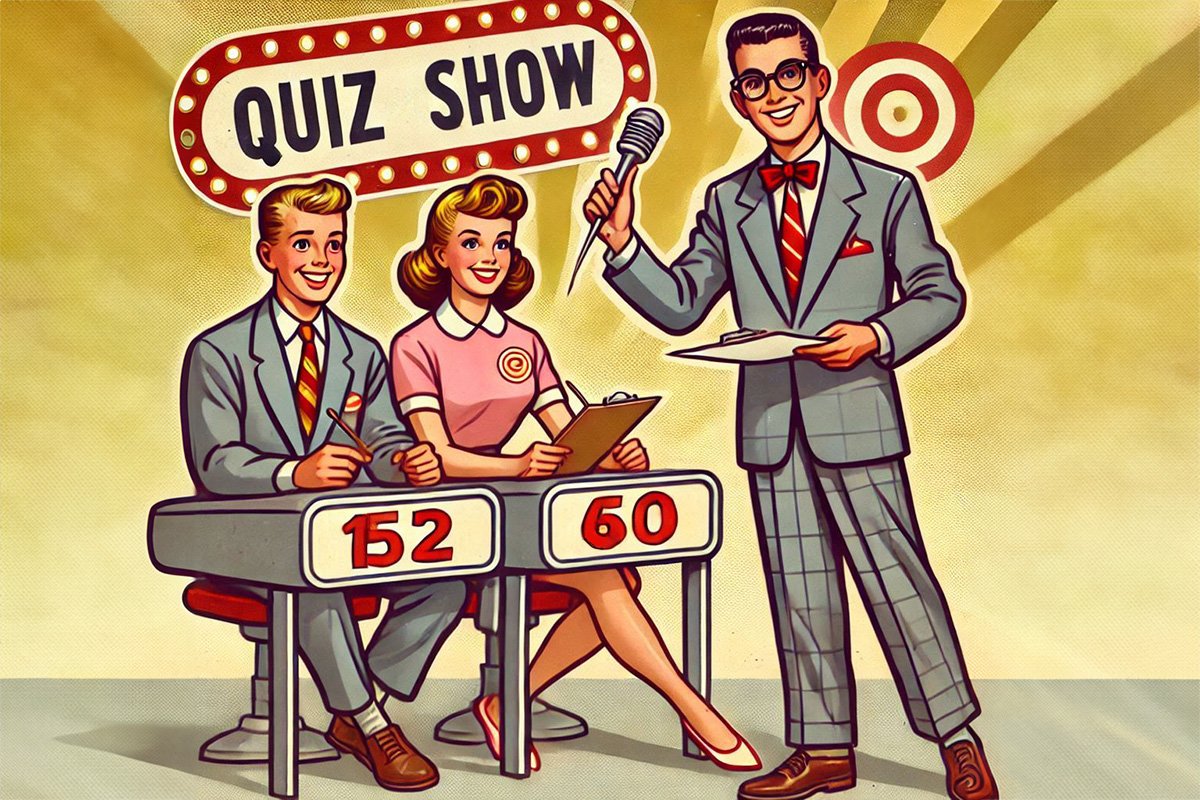
Game shows. They’re the sparkly, high-stakes arenas where everyday people chase dreams, spin wheels, and test their wits for fame and fortune. For decades, these programs have been a cornerstone of family entertainment, promising wholesome competition and exciting triumphs. But beneath the flashing lights and cheerful hosts lies a history punctuated by moments of pure, unadulterated "doom"—controversies and scandals so profound they reshaped the very fabric of television.
From elaborate cheating schemes to cringe-inducing contestant blunders and even terrifying encounters with real-world crime, game shows have delivered more than just prizes; they've given us a masterclass in human nature, revealing the intense pressures, moral ambiguities, and outright bizarre events that occur when high stakes meet live television. These are the Iconic 'Doom' Moments and Controversies Defining Game Show History, etched forever into the annals of pop culture, forever reminding us that sometimes, the biggest drama isn't scripted.
At a Glance: When Game Shows Went Off Script
- Beyond the Glitz: Game shows, despite their family-friendly image, have a long, storied history of major scandals and "doom" moments.
- A Spectrum of Scandal: Controversies range from sophisticated cheating rings and exploitative rule bending to inappropriate host comments, contestant gaffes, and shockingly, even encounters with serial killers.
- Rulebooks Rewritten: Each major controversy served as a catalyst, forcing networks and producers to implement stricter rules, enhance background checks, and refine gameplay mechanics.
- Human Nature Unveiled: These "doomed" moments highlight the intense pressure to win, the allure of fortune, and the unpredictable nature of live television, revealing both the best and worst of human behavior.
The Unveiling of Game Show's Dark Side
The story of game shows stretches back to the golden age of radio, evolving into a television staple post-World War II. They promised a simple, aspirational fantasy: answer a few questions, make a smart guess, or just be lucky, and your life could change overnight. This seemingly innocuous format cultivated an image of purity and lighthearted competition, a stark contrast to the often ruthless realities of show business.
Yet, this wholesome façade proved permeable. The combination of high cash prizes, the thrill of winning, and the sometimes-unregulated nature of early television created a fertile ground for spectacular downfalls. These weren't mere flubs; they were seismic events that left audiences shocked, trust broken, and the industry scrambling to pick up the pieces. Each "doom" moment peeled back another layer, revealing the human drama that lurked just beneath the surface of the smile-and-clap entertainment.
When the Rules Broke: Cheating, Exploitation, and Manipulation
The desire to win on a game show is potent, driving contestants to perform under pressure, sometimes to extraordinary lengths. But for a select few, that desire tipped over into outright deception, leading to some of the most infamous "doom" moments in game show history.
The Original Sin: The Twenty One Rigging Scandal (1950s)
Before there were gleaming digital screens, there was Twenty One, a quiz show that captivated millions in the late 1950s. Its star, Charles Van Doren, was a handsome, intelligent academic whose 14-week winning streak, amassing $128,000, made him a national celebrity. But the show was a lie. Former contestant Herbie Stempel blew the whistle, alleging producers had fed Van Doren answers, coached him on how to feign hesitation, and even given him questions in advance.
The ensuing congressional investigation in 1959 confirmed the cheating, exposing a widespread practice of fixing quiz shows for ratings. Van Doren eventually confessed, his confession aired on national television, shattering public trust and forever tarnishing the innocence of early TV. The scandal led to producers being blacklisted and spurred amendments to the Communications Act of 1960, making it illegal to rig quiz shows. It also served as the powerful inspiration for the critically acclaimed 1994 film Quiz Show. This was the foundational "doom" moment, teaching the industry a bitter lesson about integrity.
The Coughing Millionaire: Major Charles Ingram on Who Wants To Be A Millionaire (2001)
Fast forward to the turn of the millennium, and the British version of Who Wants To Be A Millionaire became home to one of the most audacious cheating scandals in modern game show history. Major Charles Ingram, a seemingly bumbling contestant, managed to win the top prize of £1 million. His win, however, raised immediate red flags among producers who noticed suspicious patterns: key coughs from his wife, Diana, and an accomplice, Tecwen Whittock, in the audience, subtly indicating the correct answers.
The evidence, captured on videotape and later dissected in court, showed Ingram dramatically changing his answers after hearing a strategically timed cough. The "Coughing Major" saga resulted in a highly publicized trial, convictions for deception, jail time for all three, and Ingram's military rank being stripped. His prize money was, of course, returned. This incident demonstrated how even sophisticated, high-tech game shows could fall victim to old-fashioned, low-tech deceit, proving that the allure of easy money could drive people to extraordinary, and ultimately self-destructive, lengths.
Outsmarting the System: Michael Larson's Press Your Luck Mastery (1984)
Not all forms of exploitation are illegal, as Michael Larson famously proved on Press Your Luck. In 1984, Larson, an ice cream truck driver, became a legend by winning an astounding $110,237—the largest game show payout at the time—without technically cheating. His secret? He had meticulously studied videotapes of the show, memorizing five distinct, non-random light patterns on the Big Board. He knew precisely when the "Whammy" spaces wouldn't appear, allowing him to endlessly collect money and prizes.
Larson’s genius wasn't about deception but about pure, obsessive pattern recognition. CBS investigated, but their conclusion was undeniable: he "outsmarted CBS." They couldn't accuse him of cheating because he simply understood the game better than its creators. The fallout, however, was significant. Producers immediately scrambled to add 27 new, more randomized patterns to the Big Board, ensuring no one could replicate Larson's feat. It was a "doom" moment for the show's design, forcing a fundamental shift in how randomness was perceived and implemented.
The Fugitive's Fortune: Kerry Ketchem on Super Password (1988)
Sometimes, the game show stage inadvertently becomes a backdrop for real-life crime. In 1988, a con man named Kerry Ketchem, using the alias Patrick Quinn, managed to win $58,000 on Super Password. He was smooth, charming, and seemed like any other contestant—until a sharp-eyed viewer recognized him. Ketchem was a known fugitive wanted for a string of crimes across multiple states.
When he arrived to collect his winnings, the Secret Service was waiting. He was intercepted, arrested, and NBC wisely withheld his prize money. This incident highlighted a gaping flaw in the contestant vetting process of the era. It was a wake-up call, showing how easily individuals with hidden pasts could slip through the cracks, momentarily turning a family-friendly game show into a stage for a federal manhunt.
Crossing the Line: Host Gaffes, Contestant Blunders, and Moral Dilemmas
Beyond deliberate deceit, game shows have also suffered "doom" moments born from simple human error, misjudgment, or the sheer awkwardness of live television. These instances often ignite public debate, exposing the tension between entertainment and perceived fairness.
Political Gridlock: Whoopi Goldberg's Hollywood Squares Exit (2002)
Hollywood Squares was known for its lighthearted banter and celebrity quips. However, in her final episode in 2002, Whoopi Goldberg delivered a moment that starkly deviated from the show's usual tone. Asked about George W. Bush's greatest mistake, Goldberg bluntly stated it was "going to war with Iraq."
The comment, made during a period of intense political polarization, instantly polarized viewers. Many felt her political criticism was inappropriate for the show's family-friendly environment, a sacred space for escapism. While NBC ultimately took no action, the incident underscored the delicate balance between a celebrity's right to free speech and the expectations of a mass-market entertainment program. It was a "doom" moment that highlighted the potential for real-world issues to suddenly intrude upon the insulated world of television.
Musical Mudslinging: Alex Trebek's "Losers" Comment on Jeopardy! (2016)
Alex Trebek, the beloved and dignified host of Jeopardy!, was usually the epitome of grace and wit. But in 2016, he delivered a cutting remark that left both a contestant and viewers stunned. During contestant Susan Cole's introduction, she mentioned her passion for "nerdcore hip-hop." Trebek, with a dismissive tone, responded by calling fans of the genre "Losers."
The comment caused palpable tension on stage and a firestorm among viewers. Many found Trebek's remark unnecessarily cruel and condescending, while others defended it as harmless jest. Trebek himself dismissed it as a joke, but the moment became an "iconic doom moment" for its unexpected departure from his usual persona, proving that even the most esteemed hosts can stumble, leading to uncomfortable and widely debated on-air clashes.
The "Black" Zombie Moment: Christie on Family Feud (2013)
Family Feud, known for its often hilarious and sometimes bizarre survey answers, reached peak awkwardness in 2013 with contestant Christie's now-infamous response. Asked to name qualities describing zombies, Christie, without hesitation, answered "black." The response landed with a thud, leaving host Steve Harvey and her Black opponent speechless.
The racial undertones were undeniable, creating an intensely uncomfortable silence on stage. Harvey, a master of comedic timing, eventually broke the tension by telling her to "Shut up, lady!" The moment became a viral "doom" clip, serving as a cringeworthy reminder of the unpredictable nature of live game shows, where innocent questions can sometimes elicit answers that are anything but.
The Dropped "G": Renee Durette's "Swimmin'" Snub on Wheel of Fortune
Wheel of Fortune has produced countless memorable moments, but Renee Durette's "swimmin'" answer stands out for its controversial rejection. Durette correctly identified the phrase "seven swans -swimmin'" during the bonus round. However, because she dropped the 'g' from "swimming," the answer was deemed incorrect. The outrage among viewers was immediate and immense. Many argued that her pronunciation was clear enough, especially given that she had already correctly guessed "g" earlier in the puzzle.
The perceived injustice led to a significant public outcry, with some viewers even threatening to abandon the show in protest. This "doom" moment highlighted the stringent, sometimes inflexible rules of game shows, sparking a broader debate about interpretation, context, and fairness for contestants. It’s a moment that resonates with anyone who’s ever felt cheated by a technicality. If you've ever found yourself wondering about the intricate mechanics of such shows, you might want to Explore the Wheel of Doom and other game show dynamics.
The Misspelled Proclamation: Thomas Hurley on Jeopardy! Kids Edition
Even in the kids' edition of Jeopardy!, fairness can become a contentious issue. In a particularly frustrating "doom" moment, 12-year-old Thomas Hurley lost his final round because his answer, "Emancipation Proclamation," was deemed incorrect due to misspelling "emancipation" with an extra 't' ("Emancipatton"). What truly ignited public outrage, however, was that another contestant's answer, with handwriting so illegible it was difficult to decipher, was accepted.
The inconsistency led to a firestorm of criticism, questioning the show's judgment and the arbitrary nature of what constituted an "acceptable" answer. For many, it felt like a cruel lesson for a young contestant, overshadowing the spirit of the competition with a bureaucratic technicality. It was a moment that underscored the sometimes-harsh realities of high-stakes quizzes, even for children.
The Chilling Reality: When Real-World Darkness Intersected Entertainment
Perhaps the most chilling "doom" moment in game show history is not one of cheating or gaffes, but one where the façade of entertainment completely crumbled, revealing a terrifying real-world threat.
A Date with a Killer: Rodney Alcala on The Dating Game (1978)
In 1978, the popular show The Dating Game featured a contestant named Rodney Alcala. Unknown to the show's producers or the bachelorette, Cheryl Bradshaw, Alcala was a convicted sex offender and a burgeoning serial killer with a horrific criminal history. Despite his charming demeanor, Bradshaw famously chose him for a date from behind the screen, only to back out later because she found him "creepy."
Alcala went on to be convicted of murdering at least five women, though the actual number of his victims is believed to be much higher. The revelation that a notorious serial killer had appeared on a lighthearted dating show sent shockwaves through the industry and the public. This horrific "doom" moment fundamentally changed how game shows operate. It led to the implementation of extensive, rigorous background checks for all contestants, transforming a casual vetting process into a critical, multi-layered investigation to prevent such a terrifying intersection of entertainment and true crime from ever happening again.
The Echoes of 'Doom': How Scandals Reshaped Game Shows
These iconic "doom" moments weren't just isolated incidents; they were pivotal turning points that forced the game show industry to confront its vulnerabilities and evolve.
- Increased Scrutiny and Regulation: The Twenty One scandal led to federal laws against rigging, setting a precedent for ethical conduct. Producers and networks realized the long-term damage of betraying public trust.
- Rigorous Background Checks: Rodney Alcala's appearance on The Dating Game forever changed the vetting process. What was once a cursory check became a deep dive into criminal records, references, and even social media, ensuring the safety of contestants, hosts, and the viewing public.
- Enhanced Gameplay Mechanics: Michael Larson's exploitation of Press Your Luck's patterns highlighted the need for truly random, unpredictable game elements. Show designers had to become more sophisticated in their programming to prevent similar systematic exploitations.
- Clearer Rule Interpretations: The "swimmin'" controversy and Thomas Hurley's misspelling underscored the importance of unambiguous rules and consistent application, particularly in the subjective realm of spoken language or penmanship. Producers now often err on the side of transparency and fairness, sometimes even reviewing disputed answers post-production.
- Managing Host-Contestant Dynamics: The incidents involving Whoopi Goldberg and Alex Trebek served as a reminder of the power dynamics on set and the potential for off-the-cuff remarks to cause significant backlash. Hosts now navigate an environment with greater awareness of how their words, even in jest, can be perceived and amplified.
The game show landscape today is a direct descendant of these past controversies. The rules are tighter, the vetting is stricter, and the entire production process is designed with safeguards to prevent a repeat of these dramatic downfalls.
Beyond the Whammy: Enduring Appeal and Lessons Learned
Despite, or perhaps because of, these iconic "doom" moments and controversies, game shows continue to captivate audiences worldwide. There's an undeniable allure to the promise of quick riches, the display of human intellect, and the sheer spectacle of competition. We tune in not just for the wins, but for the inherent drama that unfolds when ordinary people are placed under extraordinary pressure.
These historical blips, while sometimes painful or shocking, have become indelible parts of television history. They serve as cautionary tales, reminding us that even in the most seemingly innocuous forms of entertainment, the stakes can be surprisingly high, and the human element—with all its brilliance, flaws, and unpredictable impulses—will always find a way to make headlines. They are a testament to the fact that while the games may change, the drama of human aspiration and fallibility remains a timeless, endlessly fascinating spectacle.