The rhythmic whir, the dramatic click-clack, the final thud that lands on a glorious prize or a devastating "Bankrupt"—few elements in television history have captivated audiences quite like the game show wheel. It's a simple, elegant mechanism that injects pure chance and heart-stopping tension into a competition. But what about the less glamorous side? The "Lose a Turn," the disqualifications, the forfeitures, or even the grander systemic penalties born from scandals? The true History of Game Show Wheels and Penalties reveals a fascinating evolution, from quaint radio quizzes to high-definition global phenomena, where the consequences of a spin or a wrong answer have shaped the very fabric of entertainment.
It’s a tale of risk, reward, regulation, and the relentless human desire to test one's luck and knowledge under pressure.
At a Glance: Key Takeaways from Game Show History
- Early Beginnings: Game shows started on radio in 1923, with TV shows appearing in the late 1930s. Early formats focused on knowledge and simple tasks.
- The "Quiz Swizz" Era: The 1950s saw massive prize money, but also rigging scandals, leading to stricter rules and the FCC's involvement, fundamentally changing game show integrity.
- Rebuilding & Reinvention: The 1960s and 70s focused on "fun" and fair play, giving birth to iconic formats like Jeopardy! and Wheel of Fortune, where the wheel itself introduced elements of chance and specific penalties.
- The Wheel's Dominance: The physical wheel became a central mechanic, not just for prizes but for imposing consequences like "Bankrupt" or "Lose a Turn," adding layers of drama and strategy.
- Beyond the Wheel: Penalties evolved to include time limits, negative scoring, physical challenges, and even social elimination in later reality-hybrid formats.
- Global Expansion & High Stakes: The removal of prize limits in the UK and the success of shows like Who Wants to be a Millionaire? ushered in an era of even higher stakes, making the consequences of missteps more profound.
- Enduring Appeal: Modern game shows, from reboots to digital formats, continue to leverage the psychological impact of chance mechanics and penalties to keep audiences hooked.
The Earliest Spins: From Radio Quizzes to Television's Dawn
Before the vibrant glow of television screens, game shows thrived on the airwaves. The "Brooklyn Eagle Quiz on Current Events" debuted in 1923 on US radio, marking the genre's humble origins. These were primarily knowledge-based contests, a mental joust where the "penalty" for an incorrect answer was simply not winning. There wasn't much room for elaborate mechanics like spinning wheels, but the core thrill of competition was already present.
Fast forward to the nascent days of television. London launched the world's first high-definition regular TV service in 1936, and by May 31, 1938, the BBC broadcast the first TV game show, "Spelling Bee." Over in the US, commercial television took off in July 1941, famously featuring "Truth or Consequences." This show introduced a fascinating early form of penalty: if contestants couldn't answer a trivia question, they had to perform an often embarrassing or comical "consequence." Here, the penalty wasn't about monetary loss but public (and personal) humiliation—a powerful motivator in its own right.
Following World War II, game shows truly began to flourish, offering more substantial cash and prizes. Shows like "Break the Bank" enticed contestants with significant rewards. Innovators like Mark Goodson and Bill Todman refined formats with "Winner Take All," introducing concepts like "returning champions" and the exhilarating "buzzing in" to answer. While the Federal Communications Commission (FCC) initially tried to outlaw game shows as illegal lotteries, the US Supreme Court ruled against this in 1954, cementing their place in broadcast entertainment. The foundational elements of risk, reward, and the very first inklings of consequence were firmly in place.
The High Stakes and the Low Blows: Scandals Shape the Rules (1950s)
The 1950s ignited a game show boom, characterized by lavish sets and dizzying prize money. "The $64,000 Question" became a cultural phenomenon, captivating millions with its escalating stakes. The allure of life-changing wealth was irresistible, driving viewership to unprecedented levels. Contestants became household names, their intellectual prowess seemingly guaranteeing their fortunes.
However, beneath the gleaming facade, a darker truth lurked. This "big money" era was irrevocably tainted by what became known as the "Quiz Swizz" scandal. It emerged that contestants on many popular shows, including The $64,000 Question and Twenty-One, were being given answers in advance, coached on their delivery, and even manipulated to ensure dramatic outcomes. The public was outraged; the trust in a seemingly fair competition was shattered.
The fallout was immense. Congressional investigations followed, and legal changes were enacted to prevent such rigging ever happening again. The systemic penalty for this deception was a complete overhaul of game show production ethics and strict federal oversight. It was a stark reminder that the ultimate "penalty" could be losing the audience's faith, effectively killing an entire genre's credibility. This era hammered home the vital importance of transparency and fairness, paving the way for the rigorous rule enforcement we see today. The echoes of these scandals still influence how game shows are designed and regulated, underscoring why integrity in the game is paramount. Understanding the infamous quiz show rigging scandals is key to appreciating the evolution of game show ethics.
Rebuilding Trust: Fun, Fairness, and the Rise of Iconic Games (1960s-1970s)
The shadows of the "Quiz Swizz" prompted a necessary pivot in the 1960s. Producers, particularly in the US, shifted away from the huge-money quizzes that had been so easily rigged. The new focus was on "fun" and engaging games, often offering more modest, though still appealing, prizes. This era saw the genesis of formats that would become legendary. Jeopardy!, created by Merv Griffin, flipped the question-and-answer format, requiring contestants to phrase their responses in the form of a question. Its negative scoring for incorrect answers introduced a clear and immediate penalty for mistakes, adding a layer of strategic caution.
Simultaneously, Let's Make a Deal brought an entirely different energy, blending elements of a bazaar with chance, costume, and the unpredictable decisions of contestants. In the UK, new formats like Jeux Sans Frontiéres and University Challenge emerged, demonstrating a global appetite for diverse game show concepts.
By the 1970s, game shows were back in full force, expanding dramatically across major US networks, with up to 19 different shows airing concurrently. This was a golden age for aesthetic enhancements, too. Sets became larger, more colorful, and synthesized soundtracks added to the excitement. This dynamic period also saw significant social changes reflected in casting, with Adam Wade becoming the first Black US game show host and Betty White earning an Emmy as the first woman to host a game show.
It was during this vibrant period that Wheel of Fortune debuted in 1975, eventually becoming a syndicated powerhouse by 1983, often paired with Jeopardy!. The iconic Wheel of Fortune wheel wasn't just a prize selector; it was a potent source of both bounty and penalty. Its segments—"Bankrupt" and "Lose a Turn"—introduced a visible, tangible consequence that could instantly change a contestant's fortunes, even if they were playing perfectly. This ingenious mechanic cemented the wheel's place as a central, dramatic element in game show design. The way game shows integrated these new mechanics marked a significant step in the evolution of game mechanics.
The Wheel as Kingmaker and Punisher: A Deep Dive into Game Show Wheels
The game show wheel is more than just a decorative prop; it's a meticulously engineered instrument of chance, tension, and consequence. Its design and mechanics are crucial to its dramatic effect, turning a simple spin into a moment of collective breath-holding for millions.
The Anatomy of a Game Show Wheel
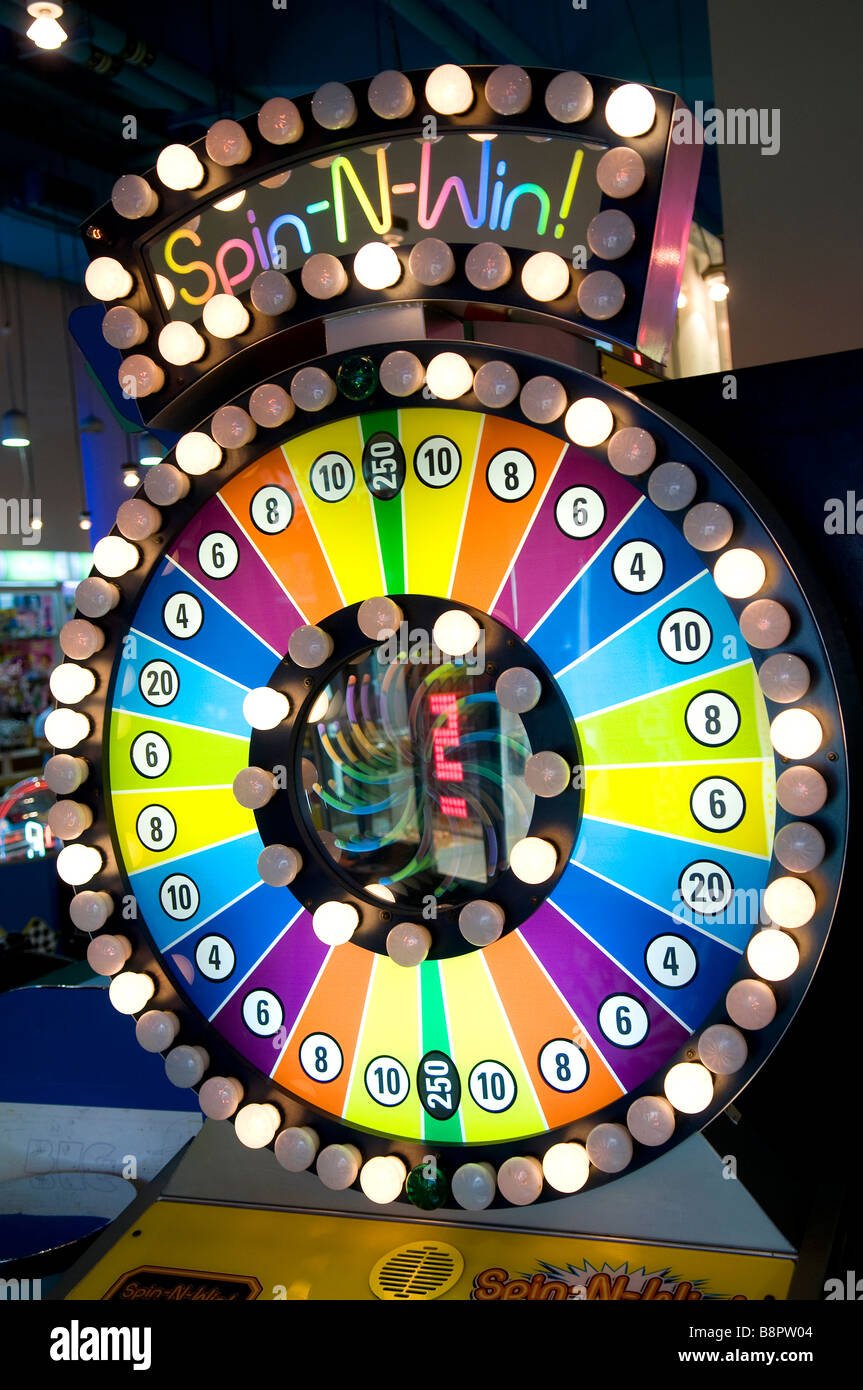
A typical game show wheel, such as the one on Wheel of Fortune, is a large, circular disc divided into numerous segments. Each segment represents a different value or action. Mounted on a central axis, the wheel is spun by a contestant, and a "flapper" or pointer indicates the segment where the wheel stops. Pins or pegs around the wheel's perimeter create that signature "click-clack" sound as the wheel slows, heightening the suspense. The weight, balance, and number of segments are all carefully calibrated to ensure a seemingly random outcome, maintaining fairness while allowing for strategic placement of both high-value prizes and dreaded penalties.
More Than Just a Spin: The Role of Chance and Strategy
While a wheel's primary function is to introduce an element of pure chance, its integration into game shows often demands strategic thinking from contestants. On Wheel of Fortune, for instance, a contestant might weigh the risk of spinning again for a higher amount against the possibility of landing on "Bankrupt" or "Lose a Turn." Do you play it safe, or do you chase the big money? This constant internal debate, fueled by the unpredictable nature of the wheel, is what makes these games so compelling. The wheel isn't just deciding your fate; it's forcing you to make calculated gambles. This interplay taps into the psychology of risk and reward, making the game both thrilling and relatable.
Penalties on the Rim: Bankrupts, Lose a Turns, and More
The true genius of the game show wheel lies in its ability to deliver immediate, impactful penalties alongside the glittering rewards.
- Bankrupt: Perhaps the most famous wheel penalty, "Bankrupt" instantly wipes out a contestant's accumulated cash for that round. The psychological impact is immense; it's a stark, zero-sum consequence that can turn triumph into despair in a single click. It's designed to be devastating, injecting genuine drama into every spin.
- Lose a Turn: Less severe than Bankrupt, "Lose a Turn" still halts a contestant's momentum and passes the advantage to an opponent. It’s a frustrating penalty that can disrupt strategy and build tension, especially in tight races.
- Other Specialized Penalties: Some shows have incorporated unique penalty segments, such as "Joker" on early versions of The Joker's Wild, which could force a contestant to give up their turns to an opponent. The Wheel of Doom on some variations (and even on Wheel of Fortune during special events) can feature even more aggressive outcomes, from deducting money to forcing undesirable actions. (For a deep dive into these extreme stakes, check out Our full Wheel of Doom guide).
The Psychological Impact
The visual spectacle and the distinctive sounds of a spinning wheel are carefully crafted to maximize audience engagement. The anticipation as the flapper clatters over each segment, the slowing rotation, the final, decisive landing—it's a mini-drama unfolding in real-time. When it lands on a penalty, the collective groan from the audience (and the contestant's visible dismay) is palpable. This shared experience of hope and dread is a powerful testament to the wheel's enduring power as a central game show mechanic.
Beyond the Wheel: Other Forms of Penalties in Game Shows
While the wheel provides a dramatic, chance-based penalty system, game shows have devised a myriad of other ways to introduce consequences, maintain fairness, and heighten excitement. These penalties often reflect the specific nature of the game, whether it's knowledge, speed, physical prowess, or even social strategy.
- Time Penalties: In fast-paced quiz shows like Jeopardy! or Countdown, time is a critical resource. Answering too slowly can result in losing the opportunity to buzz in, or in some cases, specific point deductions. The pressure of the clock becomes a relentless, self-imposed penalty, forcing quick thinking under duress.
- Incorrect Answer Penalties: This is a fundamental type of penalty across many game shows. In Jeopardy!, a wrong answer results in a negative score, directly reducing a contestant's winnings. Other shows might impose a "wrong answer buzz" and the loss of a turn, or even elimination from the round or entire game. The immediate feedback of being wrong, coupled with a tangible consequence, is a core driver of competition.
- Physical Penalties: With the rise of more physically demanding game shows, especially those aimed at younger audiences or featuring elaborate sets, physical penalties became common. Nickelodeon's slime-filled games, for instance, often involved getting doused in green goo for incorrect answers or failing challenges. Shows like Gladiators or The Crystal Maze involved direct physical consequences for failure, such as being "locked in" a zone, losing valuable time, or failing to secure a crystal. These tangible, often messy, penalties add a layer of slapstick and challenge.
- Embarrassment/Humiliation: As pioneered by Truth or Consequences, some penalties lean into social discomfort. While less common in modern high-stakes games, the idea of having to perform an awkward task or reveal a funny anecdote as a "consequence" for a wrong answer taps into a different kind of human vulnerability.
- Strategic/Social Penalties: The era of reality television brought new forms of penalties into the game show lexicon. Shows like The Weakest Link famously used social strategy, where contestants collectively voted off the "weakest link," resulting in an elimination penalty based on performance and alliance. Deal or No Deal presents a psychological penalty: the constant internal battle of whether to accept a banker's offer or risk it all, with the "penalty" being a potentially much lower (or higher) cash prize than one might have had.
These varied penalty systems ensure that game shows remain dynamic, unpredictable, and ultimately, thrilling for both participants and viewers.
Innovation and Expansion: Tech, Cable, and Global Formats (1980s-1990s)
The 1980s ushered in an era of greater technological integration and elaborate stunts in game shows. The UK's Treasure Hunt, for example, pioneered action game shows by using helicopters and live remote broadcasts to add a sense of adventure and a completely new set of physical challenges and time-based penalties. Channel 4’s launch of Countdown with its unique word and number puzzles offered a cerebral challenge with intense time pressures. Meanwhile, US cable television began to develop niche shows, from MTV's pop culture-centric Remote Control to Nickelodeon's energetic, slime-filled children's games, where physical penalties were often played for laughs.
The early 1990s might have been a "dry spell" for adult game shows in the US, but it was a "golden age" for children's games, often featuring elaborate physical challenges where failure meant a fun, messy penalty. A significant turning point came in 1994 with the launch of the Game Show Network (now GSN), which breathed new life into classic formats and introduced original programming, reminding audiences of the enduring appeal of the genre.
A major shift in the UK occurred on January 1, 1993, when prize limits were finally removed. This legislative change allowed for truly aspirational prizes, like a £100,000 house on shows like "Raise the Roof." This era sparked a new wave of big-budget studio extravaganzas such as The Crystal Maze and Gladiators, which placed high physical demands on contestants. Failure in these games often resulted in being trapped, losing time, or facing a more formidable "Gladiator"—direct, physical consequences that were far removed from simply losing a turn on a wheel. The increased stakes naturally amplified the impact of every penalty.
The New Millennium: Reality TV, Celebrity Hosts, and Enduring Legacies (2000s-Present)
The late 1990s marked a "new golden age" for UK game shows, even amidst the rise of reality-based "docusoaps." The launch of Channel 5 and the conversion of The Family Channel into Challenge TV—a dedicated game show channel—underscored the genre's renewed vigor. Lifestyle-oriented shows like Masterchef and Ready Steady Cook blended competition with practical skills, where the "penalty" for failure was often elimination from the culinary competition.
However, it was the British import Who Wants to be a Millionaire? in 1998 that truly reignited prime-time game shows globally. Its high-stakes, single-elimination format, combined with iconic phrases like "Is that your final answer?" (which became a global catchphrase), brought game shows back to the forefront of popular culture, including in the US. The show's penalty wasn't a "Bankrupt" but the agonizing decision of whether to walk away with a guaranteed sum or risk it all for the next question.
The early 2000s also saw the massive rise of "24/7" reality formats like Big Brother and Survivor, which integrated interactive elements and introduced a new kind of social penalty: being voted off by peers. These shows often blurred the lines between game show and reality TV, emphasizing strategy, alliances, and the ultimate penalty of elimination. Talent shows, blending reality with competition, also soared, exemplified by Popstars and Pop Idol.
Around 2005, the UK saw a temporary slump, but Deal or No Deal, with its £250,000 top prize, revitalized the genre by focusing purely on the psychology of risk and negotiation, where the "penalty" was misjudging the elusive banker. This success spurred the return of classic formats like Bullseye and The Price is Right. Today, traditional formats like Wheel of Fortune, Jeopardy!, and Family Feud continue to dominate, often benefiting from successful reboots hosted by A-list celebrities. The accessibility of modern game show formats through streaming and dedicated nostalgia channels like Buzzr ensures that the legacy of game shows, with their iconic wheels and varied penalties, remains as compelling as ever.
Navigating the Risk: Why Penalties Endure in Game Show Design
For nearly a century, from radio to modern streaming platforms, game shows have understood a fundamental truth: without stakes, there is no drama. And the most effective way to establish stakes is through the judicious application of penalties.
Penalties serve several crucial functions in game show design:
- Heightening Drama and Tension: The potential for a penalty injects every decision, every spin, and every answer with a sense of urgency and consequence. Knowing that a "Bankrupt" or a negative score is just a wrong move away keeps both contestants and viewers on the edge of their seats.
- Maintaining Fairness and Integrity: Post-Quiz Swizz, penalties became essential for establishing clear rules and discouraging cheating. Disqualification, score reduction, or losing a turn are direct consequences for not adhering to the game's structure, ensuring a level playing field.
- Encouraging Strategic Play: When penalties are part of the game, contestants must consider not just how to win, but also how to avoid losing. This fosters strategic thinking, risk assessment, and calculated gambles, moving the game beyond simple trivia.
- Creating Relatability and Empathy: Audiences naturally empathize with contestants facing a penalty. Whether it's the frustration of losing a turn or the devastation of going bankrupt, these moments create shared emotional experiences, making the show more engaging.
- Adding Variety and Unpredictability: Penalties, especially those delivered by a spinning wheel, introduce an element of the unexpected. This prevents the game from becoming too predictable and ensures that even the most dominant contestant can face a setback.
Ultimately, the enduring appeal of game shows lies in their careful balance of skill, luck, and consequence. Penalties, whether a physical dunking, a financial wipeout, or a strategic elimination, are not just arbitrary punishments; they are integral narrative devices that drive the competition, elicit powerful emotions, and reinforce the belief that in games, as in life, actions (or spins) have consequences.
The Future Spin: What's Next for Game Show Mechanics?
The landscape of entertainment is constantly shifting, yet the core mechanics of game shows—including the beloved wheel and the various forms of penalties—have proven remarkably resilient. As technology advances, we're likely to see even more sophisticated integration. Digital wheels could offer even greater customization and visual flair, while interactive elements might allow home viewers to experience their own "penalties" or rewards alongside the contestants. Imagine a game where your wrong guesses at home impact a shared digital prize pool!
However, the fundamental psychological triggers that make a spinning wheel thrilling or a penalty agonizing will likely remain unchanged. The human desire to test luck, knowledge, and nerve, to witness dramatic highs and lows, and to see fair play upheld, is timeless. From the analog clatter of the first game show wheel to the sleek, digital interfaces of tomorrow, the push and pull of potential gain and unavoidable loss will continue to define this enduring genre. The journey of game show wheels and penalties is far from over; it's simply poised for its next exhilarating spin.